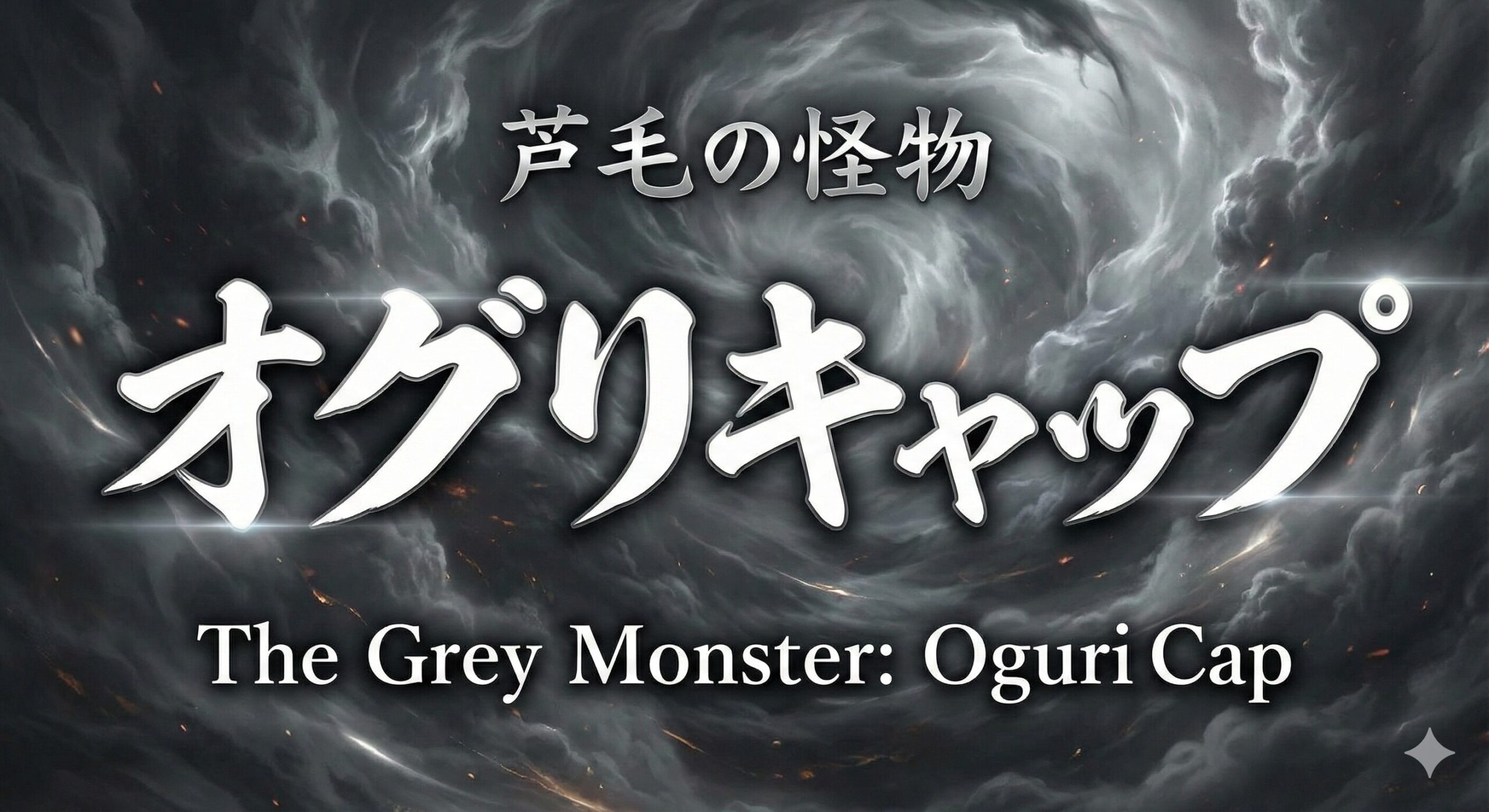
Hello, racing fans from around the world! I am Dr. Toku, a veterinarian and analyst for “Japan Racing Daily.”
Today, I am putting down my stethoscope to speak to you not just as a doctor, but as a fan whose soul was ignited by a single horse. If you are reading this, you are likely captivated by the intense manga and anime “Umamusume: Cinderella Gray.”
You know the character: the voracious eater with the quiet demeanor and the terrifying “Zone” on the track. But do you know the real Oguri Cap? As a veterinarian, I can tell you that his biology was exceptional. As a fan, I can tell you his story is more dramatic than fiction.
Here is the true story of the “Ashige no Kaibutsu” (Grey Monster).
In the late 1980s, Japanese horse racing was viewed strictly as gambling for older men. Oguri Cap changed everything. He was an “Idol Horse” who brought plushies into the grandstands and women to the racetracks.
For fans of Umamusume Cinderella Gray, understanding his real history will make every panel of the manga and every scene of the anime hit ten times harder. He didn’t just run; he fought.
From Kasamatsu to Central: The Legend Begins (1988)
In “Umamusume Cinderella Gray”, we see Oguri starting in the gritty local races of Kasamatsu. This is historically accurate. He was born with bad legs (a condition called outward rotation of the right foreleg), and no one expected him to be a star.
Yet, after dominating the local Kasamatsu circuit, he transferred to the JRA (Japan Racing Association) Central Racing. In 1988, he did the unthinkable: he transferred to the highest level and immediately started winning.
However, a tragedy loomed. Because he transferred from local racing, he was not registered for the “Classic Races” (like the Japanese Derby). While his rivals fought for prestige, Oguri Cap was winning race after race in the “background,” extending his winning streak to 14. He was the strongest horse in Japan, yet he wasn’t allowed to prove it in the Derby. This injustice fueled his popularity—he was the underdog fighting the system.
The Rivalry with Tamamo Cross & First Grand Prix
Every great hero needs a rival. In Umamusume Cinderella Gray, the tension between Oguri and Tamamo Cross is electric. In reality, this was the “Grey vs. Grey” war.
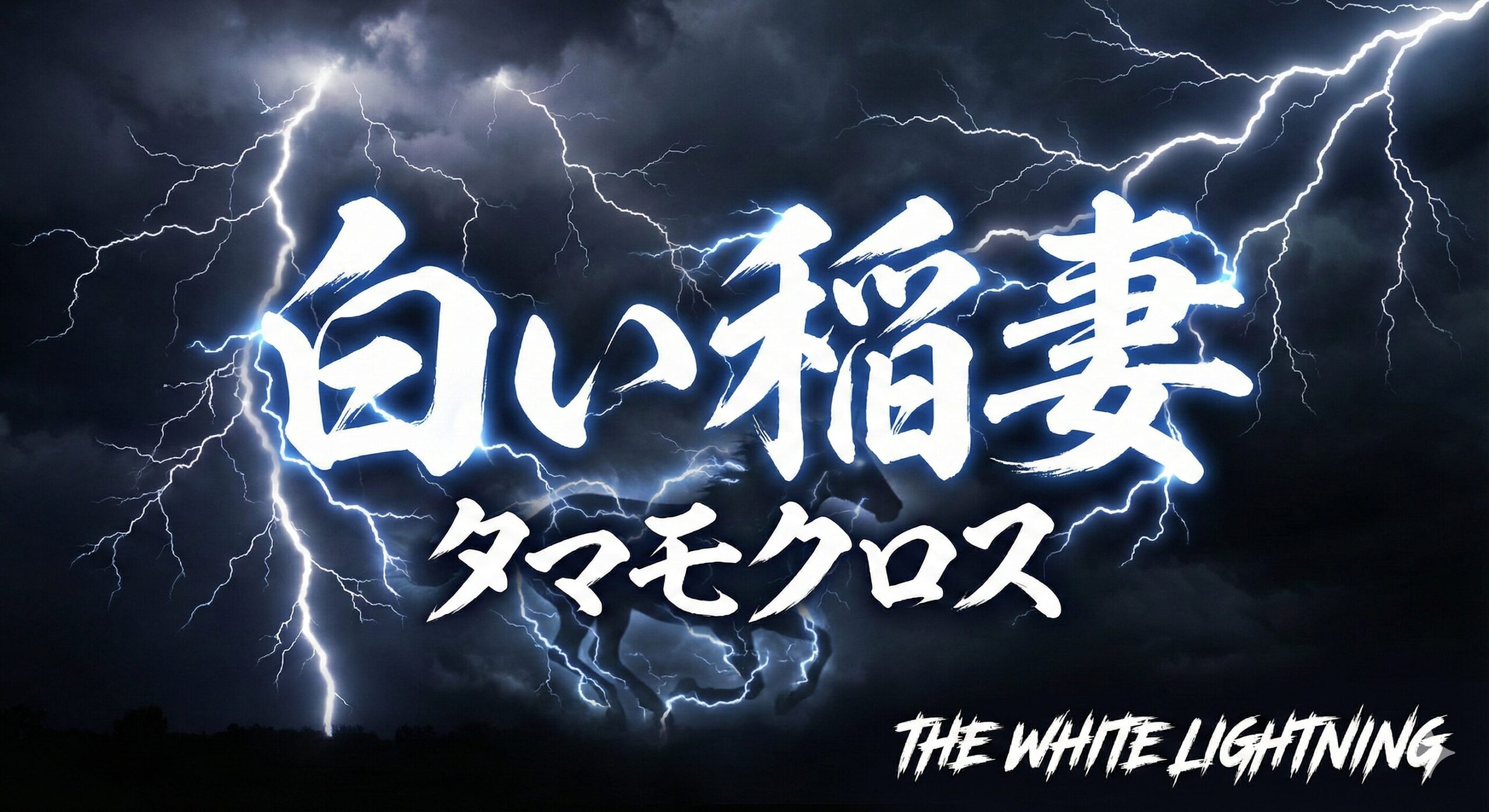
Tamamo Cross (The White Lightning) was the older, established emperor of the turf. In the 1988 Tenno Sho (Autumn), Oguri finally faced him. It was a crushing defeat. Oguri’s winning streak ended. He learned that talent alone wasn’t enough to beat the King.
But Oguri Cap was a learner. In the Arima Kinen (The Grand Prix) at the end of the year, he faced Tamamo Cross again. This time, Oguri utilized a brilliant tactical ride to defeat his rival, claiming his first G1 title and proving he was the true Ace of Japan.
The “Monster” Schedule of 1989
This is the era that defines the legend of Oguri Cap Umamusume. In 1989, Oguri Cap undertook a racing schedule that, from a modern veterinary perspective, was absolute madness.
🩺 Dr. Toku’s Veterinary Insight
“In modern racing, a G1 horse runs perhaps 3 or 4 times a year. Recovery takes months. In the autumn of 1989, Oguri Cap ran the Mile Championship (1,600m) and then, with only one week of rest, ran the Japan Cup (2,400m) against the best horses in the world.
Biologically, this is absurd. The lactic acid buildup, the micro-tears in the muscle fibers, and the mental stress are immense. Yet, not only did he run, he clocked a world-record time in the Japan Cup. His heart size and recovery rates were likely statistical anomalies. He possessed a ‘will’ that transcended physiology.”
He fought fierce battles against Inari One and Super Creek (the other two of the “Heisei Three Strong”).
The Mile Championship against Bamboo Memory was a desperate duel where Oguri refused to lose. And the Japan Cup against the New Zealand mare Horlicks remains one of the fastest, greatest races in history. Even though he lost by a neck, his time was faster than the existing world record.
The Miracle Last Run (1990 Arima Kinen)
By 1990, the heavy schedule had taken its toll. Oguri Cap was tired. He lost the Tenno Sho (6th place) and was crushed in the Japan Cup (11th place). The media wrote: “Oguri is finished.” “He is a miserable legend.”
Fans begged his owners to retire him to save his dignity. But one last race remained: The 1990 Arima Kinen.
He was paired with the young genius jockey, Yutaka Take. Nobody believed he could win—except the fans who loved him. 177,000 people packed Nakayama Racecourse.
What happened next is the greatest moment in Japanese racing history. The “Miracle Run.” As he crossed the finish line, the roar wasn’t just cheering; it was the “Oguri Call.” 170,000 people chanting his name in tears.
Oguri Cap in “Umamusume Cinderella Gray”
The anime and manga depict Oguri entering a “Zone” known as the Gray Phantom. While the visual effects are fiction, the feeling is real. When the real Oguri Cap lowered his head and pinned his ears back, the atmosphere on the track changed. He possessed an intimidation factor that broke the spirits of other horses.
Umamusume Cinderella Gray is a faithful love letter to this horse’s grit.
Conclusion
Oguri Cap was not just a fast horse. He was a hero who came from the countryside, faced the elites, endured impossible schedules, fell from grace, and rose one last time to create a miracle.
For those of you enjoying his story through Umamusume, know that the tears you shed watching the anime are the same tears Japan shed in 1990. He is, and always will be, our beloved Monster.
Dr. Toku signing off. See you at the racetrack!



Comments