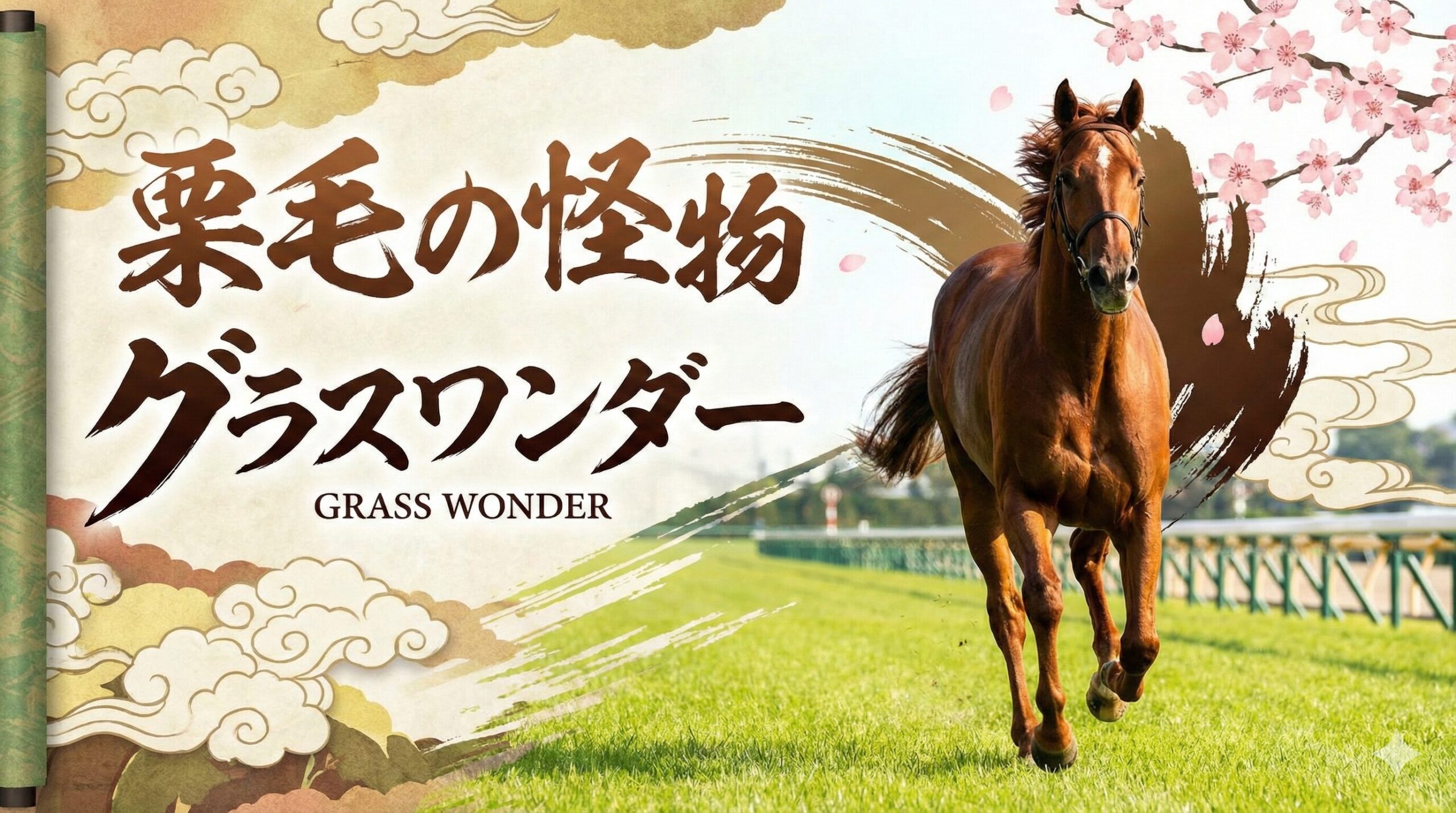
For many modern fans, the name Grass Wonder conjures images of a gentle, soft-spoken girl in a traditional green outfit—a Yamato Nadeshiko who enjoys tea ceremonies and possesses a surprisingly bottomless appetite. This is the Grass Wonder Umamusume character that has captured hearts worldwide.
However, long before the anime and mobile game took the world by storm, there was a real chestnut stallion who thundered across Japan’s turf. He wasn’t known for being gentle; he was known for sheer, overwhelming power. In the late 1990s, the real Grass Wonder horse was dubbed “The Monster” (Kaibutsu), a beast of speed who crushed rivals and defined an era.
The purpose of this article is to bridge the gap between the 2D world and the turf. Here, we explore the facts, the true Grass Wonder personality, and the fierce battles of the Golden Generation that inspired the stories fans love today.
Grass Wonder in Umamusume vs. The Real Horse
To understand the legend, we must first look at the contrast between the character and the reality. The Grass Wonder Umamusume depiction is fascinating because it plays heavily on the concept of “Gap Moe”—a contradiction that makes a character cuter.
The Anime Character
In the Umamusume: Pretty Derby franchise, Grass Wonder is portrayed as calm, polite, and American-born but culturally Japanese. She often carries a naginata (halberd), symbolizing her warrior spirit hidden beneath a serene exterior. A running gag involves her immense appetite, often seen eating massive portions of food with a smile.
The Real “Monster” Personality
So, what was the real Grass Wonder personality like? Interestingly, the “big eater” trait is historically accurate. Stable staff reported that Grass Wonder had a robust appetite and was generally calm and intelligent in the stable. He wasn’t a wild, uncontrollable horse like Gold Ship.
However, once he stepped onto the track, the “gentle” image vanished. His nickname, “The Monster,” wasn’t given because of a bad temper, but because of his terrifying performance capabilities. He possessed a piston-like running form and an acceleration that demoralized his opponents. While the anime character smiles politely before crushing her rivals, the real horse simply overpowered them with a raw strength that left spectators in awe.
Early Career: The Birth of a Monster
The story of the Grass Wonder horse begins in the United States, where he was born in 1995. Sired by Silver Hawk, he was purchased and brought to Japan. As a foreign-bred horse, he faced restrictions at the time that prevented him from entering certain Classic races, a struggle often reflected in the anime’s narrative.
The 1997 Impact
Grass Wonder debuted in September 1997 and immediately signaled that he was different. He won his first three races effortlessly, but the world truly took notice at the Asahi Hai Sansai Stakes (now the Asahi Hai Futurity Stakes).
In this G1 race, he didn’t just win; he dominated. He broke the course record with a time of 1:33.6, a record that stood for years. He won by 2 1/2 lengths, but it looked like he was in a different gear entirely compared to the other horses. It was this specific performance that earned him the moniker “The 20th Century’s Monster.”
The Tragedy
Just as fans were dreaming of an undefeated career, tragedy struck. In the spring of 1998, Grass Wonder suffered a fracture in his right hind leg. This injury forced him to miss the Satsuki Sho and the Japan Derby (Tokyo Yushun). While his contemporaries were fighting for glory, “The Monster” was in rehabilitation, watching from the sidelines. This period of absence set the stage for one of the greatest comebacks in JRA history.
The Golden Generation & Key Rivals
To discuss Grass Wonder, one must understand the era he lived in. He belonged to the 1998 Classic Generation, widely regarded as the “Golden Generation” of Japanese horse racing. The depth of talent in this year was staggering.
The Key Players
- El Condor Pasa: Another foreign-bred champion who would go on to challenge the world in the Prix de l’Arc de Triomphe. He and Grass Wonder were often compared as the two foreign titans.
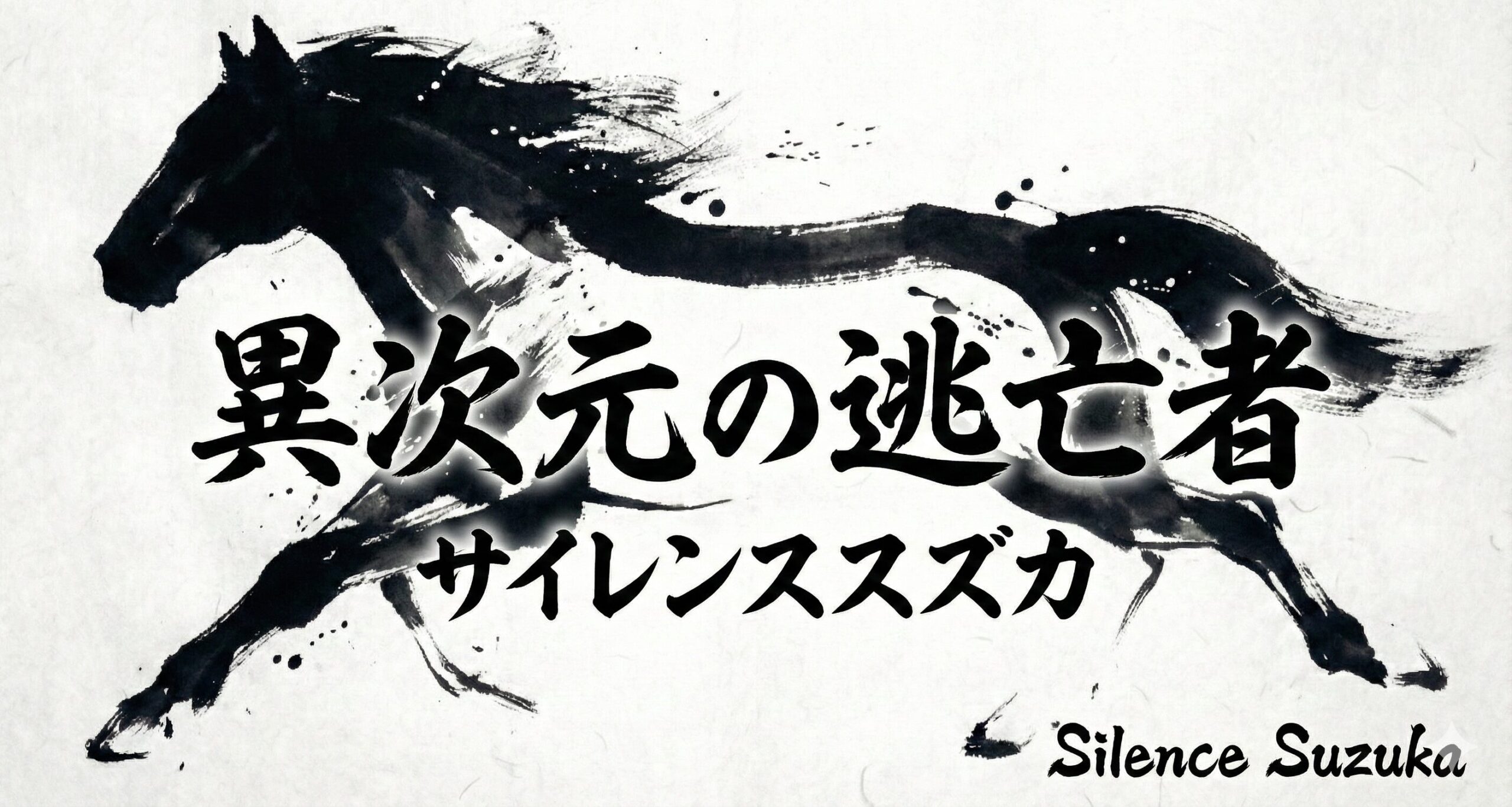
- Silence Suzuka: The “Runaway Sonic.” Though slightly older, his speed defined the era until his tragic accident.
- Special Week: The protagonist of the Golden Generation. A Japanese-bred horse who won the Derby that Grass Wonder missed. He would become Grass Wonder’s ultimate rival.
The Comeback: 1998 Arima Kinen
Grass Wonder returned to the track in late 1998 but suffered defeats in his prep races, leading many to whisper that “The Monster is finished.” He entered the Arima Kinen (The Grand Prix) as the 4th favorite.
The race included the older, established champions and the best of his generation (excluding Special Week and El Condor Pasa). In a stunning turn of events, Grass Wonder silenced the critics. Under jockey Hitoshi Matoba, he surged from the outside, capturing the G1 title and proving that the Monster had returned. This victory marked the beginning of his true reign.
Grass Wonder vs Special Week: A Legendary Rivalry
For racing historians and anime fans alike, the core of the narrative is Grass Wonder vs Special Week. This rivalry is the stuff of legends, representing a clash of styles: The Foreign Monster vs. The Japanese Hero.
Round 1: 1999 Takarazuka Kinen
In the spring of 1999, Special Week was in peak form, having just won the Tenno Sho (Spring). Grass Wonder was also winning. They finally met at the Takarazuka Kinen, a race decided by fan voting.
Special Week was the favorite. However, Grass Wonder’s jockey, Hitoshi Matoba, executed a chilling strategy. He essentially “marked” Special Week the entire race, shadowing him perfectly. When Special Week made his move, Grass Wonder moved with him—and instantly crushed him. Grass Wonder won by three lengths, leaving Special Week in second place. It was a complete dominance that cemented Grass Wonder’s superiority at that moment.
Round 2: 1999 Arima Kinen (The Climax)
If the Takarazuka Kinen was a display of dominance, the 1999 Arima Kinen was a display of heart. This is one of the most famous races in Japanese history.
Grass Wonder was aiming for a consecutive Arima Kinen victory. Special Week, running the final race of his career, was determined to avenge his loss.
Coming down the final stretch, the two horses broke away from the pack. They matched stride for stride, battling fiercely to the line. They crossed the finish line in perfect synchronization.
It was so close that Special Week’s jockey, the legendary Yutaka Take, believed he had won. He pumped his fist and took a victory lap in front of the cheering crowd. However, the photo finish told a different story.
Grass Wonder had won by a mere 4 centimeters.
Despite being not in his best physical condition that day, Grass Wonder’s sheer willpower allowed him to extend his nose just enough to snatch victory from his greatest rival. It was a heartbreaking end for Special Week, but a testament to Grass Wonder’s status as the ultimate winner.
Career Statistics & Legacy
Grass Wonder retired in 2000. While his final races were marred by fitness issues, his peak performance remains etched in history.
Profile Table
| Category | Details |
| Birth Date | April 7, 1995 |
| Sire | Silver Hawk |
| Dam | Ameriflora (Danzig) |
| Career Record | 15 Starts: 9 Wins, 1 Second |
| Total Earnings | ¥691,646,000 |
| Major G1 Wins | Asahi Hai Sansai Stakes (1997) Arima Kinen (1998) Takarazuka Kinen (1999) Arima Kinen (1999) |
The Legacy Continues
Grass Wonder’s influence didn’t end on the track. As a stallion, he defied expectations again. He sired Screen Hero, who won the Japan Cup. Screen Hero then sired Maurice, one of the greatest milers in global racing history. Through these descendants, the blood of “The Monster” continues to flow in modern racing.
Conclusion
Whether you know him as the naginata-wielding girl from Umamusume or the chestnut powerhouse of the late 90s, Grass Wonder commands respect. He was a horse that overcame injury, defied the “foreign-bred” stigma of his time, and engaged in one of the sport’s greatest rivalries with Special Week.
For fans of the anime, watching the real race replays of the 1999 Takarazuka and Arima Kinen adds a profound layer of emotional depth to the character. The real Grass Wonder wasn’t just a horse; he was a warrior who refused to lose when it mattered most.



Comments